How Sanitation Challenges Affect Girls in Kasese and Ntoroko
‘Resilient and dignified communities, managing their environment and natural resources sustainably’

Environmental Alert, in partnership with Südwind Verein für Entwicklungspolitik und globale Gerechtigkeit, is implementing the project “Resilient Communities to Health and Climate Change Hazards in Uganda (RCHCH-U),” supported by the Austrian Federal Ministry of Social Affairs, Health, Care and Consumer Protection.
The project has a duration of 24 months (01 November 2024 – 31 October 2026) and aims to improve the resilience of health centres, schools, and vulnerable communities, particularly women, school-going children, and the elderly, in the disaster-prone and conflict-affected districts of Kasese and Ntoroko in the Rwenzori Region of Uganda.
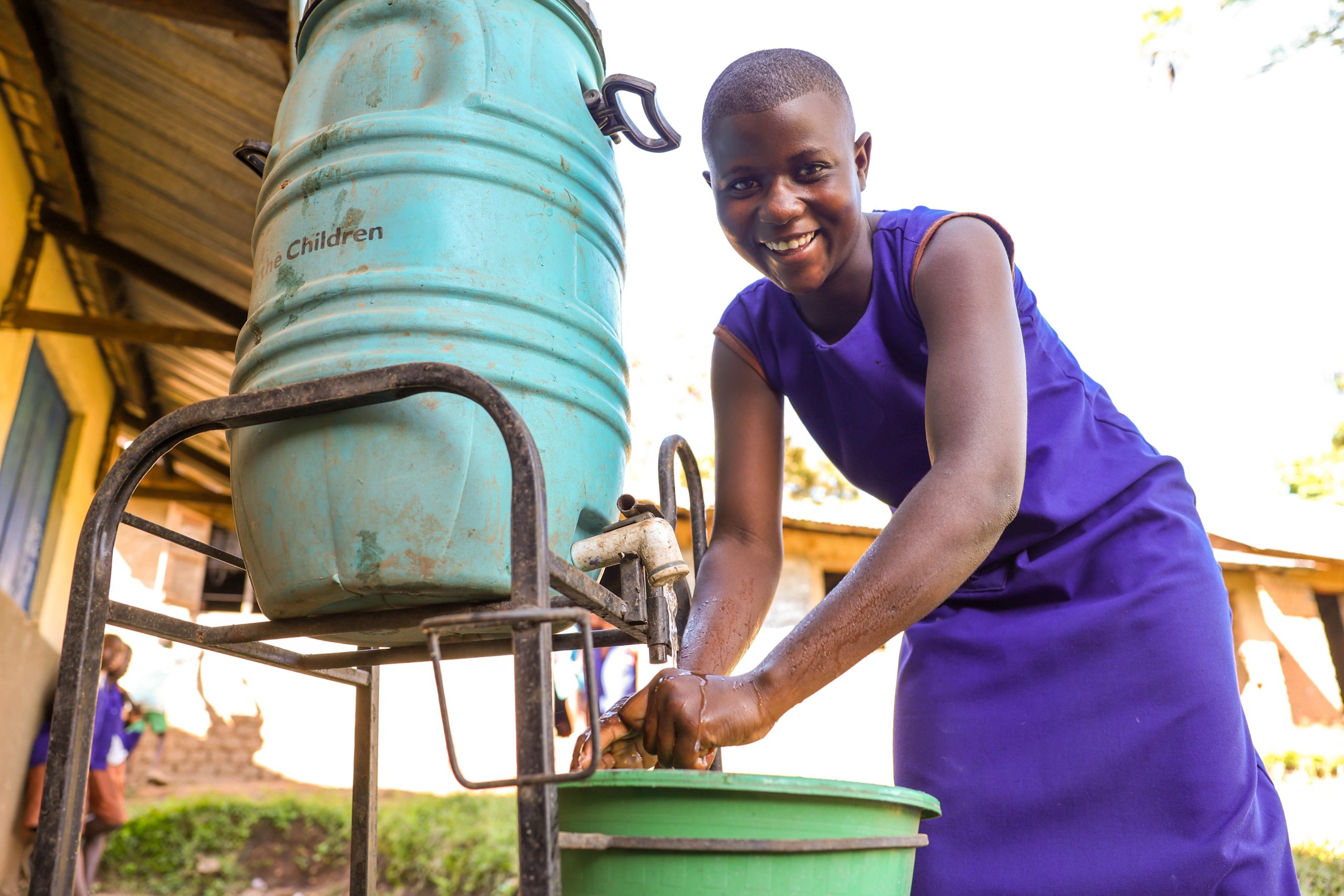
The project improves access to energy, sanitation, and hygiene services by constructing and rehabilitating WASH facilities in schools and health centres. It also promotes community awareness and education by strengthening the capacity of Village Health Teams (VHTs), School Health Clubs (SHCs), and Health Unit Management Committees (HUMCs), while enhancing sustainable livelihood opportunities to reduce poverty and food insecurity.

About the ROOTS Campaign and The National Tree Planting Day 2026.
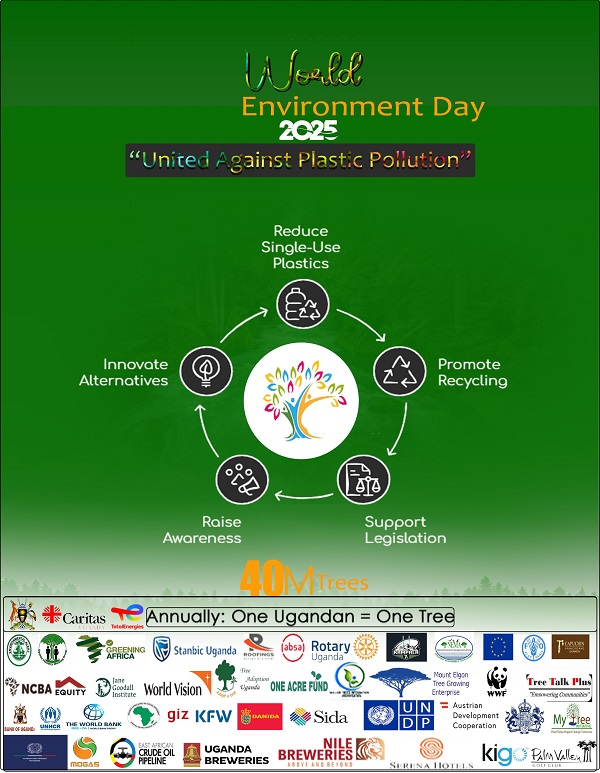
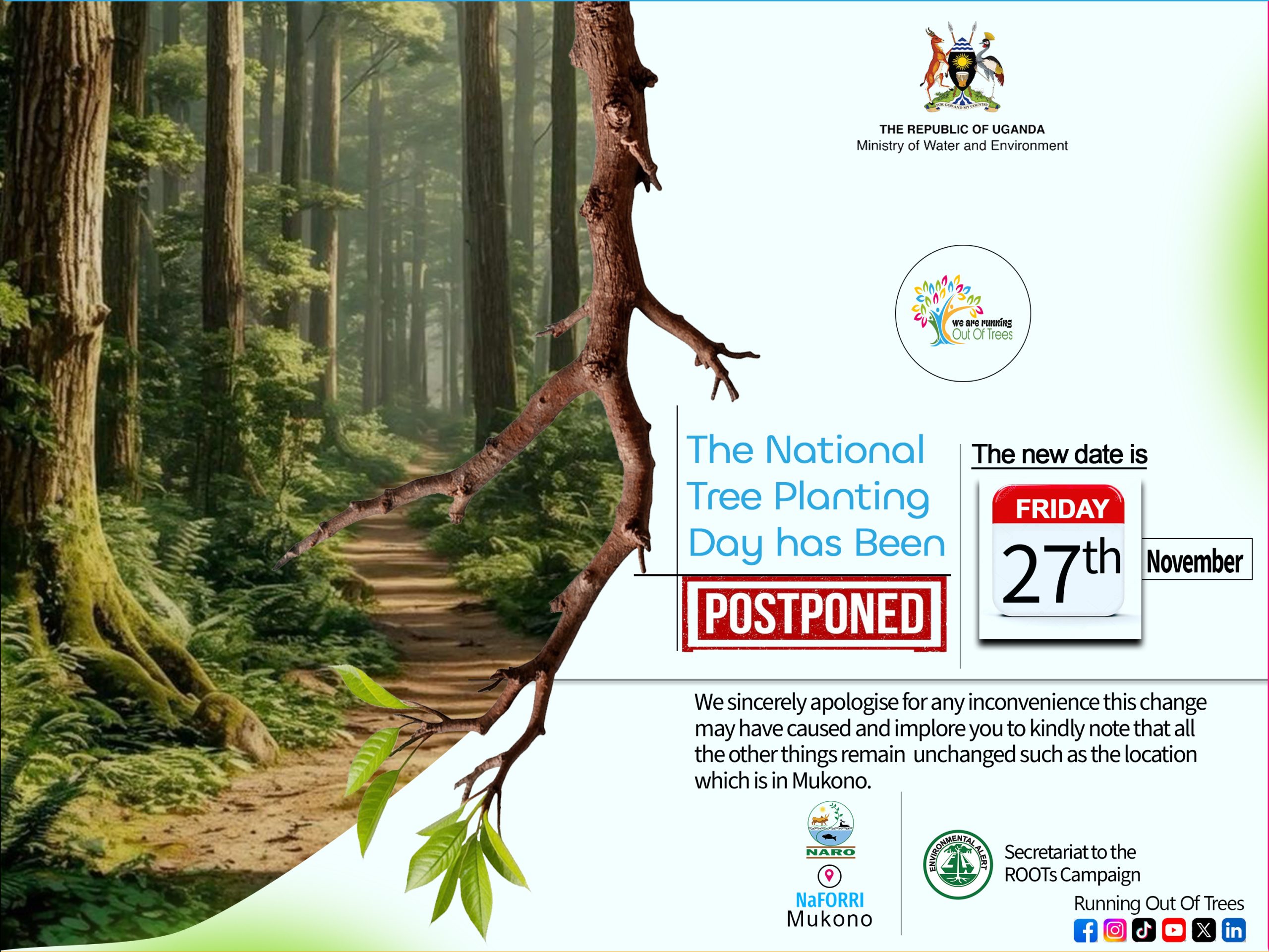
The Running Out of Trees (ROOTS) Campaign is a nationwide tree-planting initiative launched in 2019 by the Ministry of Water and Environment (MWE) to promote the planting of at least one tree per Ugandan annually. The campaign builds on Uganda’s 2014 Bonn Challenge commitment to restore 2.5 million hectares of degraded landscapes by 2030 and is implemented in partnership with the private sector, development partners, civil society organisations and other stakeholders. ROOTS focuses on reforestation, landscape restoration and forest conservation to address forest loss and climate change. The campaign runs throughout the year and culminates in the National Tree Planting Day (NTPD). The 2026 NTPD, initially scheduled for 2 October at NaFORRI, Mukono, has been postponed to 27 November 2026. We apologise for any inconvenience caused.

Resilient and dignified communities, managing their environment and natural resources sustainably.

Environmental Alert exists to advocate for enabling environment, sustainable natural resources management and food security for targeted communities through empowerment and policy engagement.

Environmental Alert upholds respect for people, communities, cultures, and the environment. The organisation values diverse perspectives and promotes dignity, inclusiveness, and mutual understanding in all engagements.
We are committed to openness in our processes, communication, and decision-making. Environmental Alert ensures that stakeholders have access to accurate information and that actions are carried out transparently and honestly.
Environmental Alert takes full responsibility for its decisions, resources, and results. We remain answerable to the communities we serve, partners, donors, and the environment we seek to protect.
High standards of competence, ethics, and dedication guide our work. Environmental Alert staff and partners strive to deliver quality services and uphold excellence in all programmes and interactions.
We believe in the power of collective effort. Environmental Alert fosters collaboration, shared learning, and unity across teams, partners, and communities to achieve sustainable environmental outcomes.
Integrity is at the heart of Environmental Alert’s operations. We uphold honesty, ethical conduct, and strong moral principles to build trust and ensure credibility in all our work.
Environmental Alert (EA) was founded in 1988 and is officially registered with the NGO Board as a Ugandan non-governmental organization (NGO), incorporated as a company limited by guarantee. EA is governed by an independent Board that is responsible for providing strategic oversight of the organization including ensuring its integrity as a voluntary service organisation.
Since 1998, the organization has emerged from addressing needs orientation to contributing to an enabling natural resources policy and practice environment, with increased and active participation and self-representation of poor and vulnerable natural resources poor men, women and youth.
How Sanitation Challenges Affect Girls in Kasese and Ntoroko

A Community Led Intervention Towards the Restoration of Manwa Local Forest Reserve
Uganda Moves to Strengthen Climate Negotiation Capacity on Mitigation Ahead of COP30.

Environmental Alert Empowering Vulnerable Communities in Far to reach areas of Kasese and Ntoroko.

Uganda Commissions 13 New Boreholes in Kibaale, Boosting Water Security and Climate Resilience